Autonomous AI Co-Pilot
Converses with pilots, interprets actual aircraft data, recommends technical procedures, and reduces cockpit workload during routine and emergency operations.
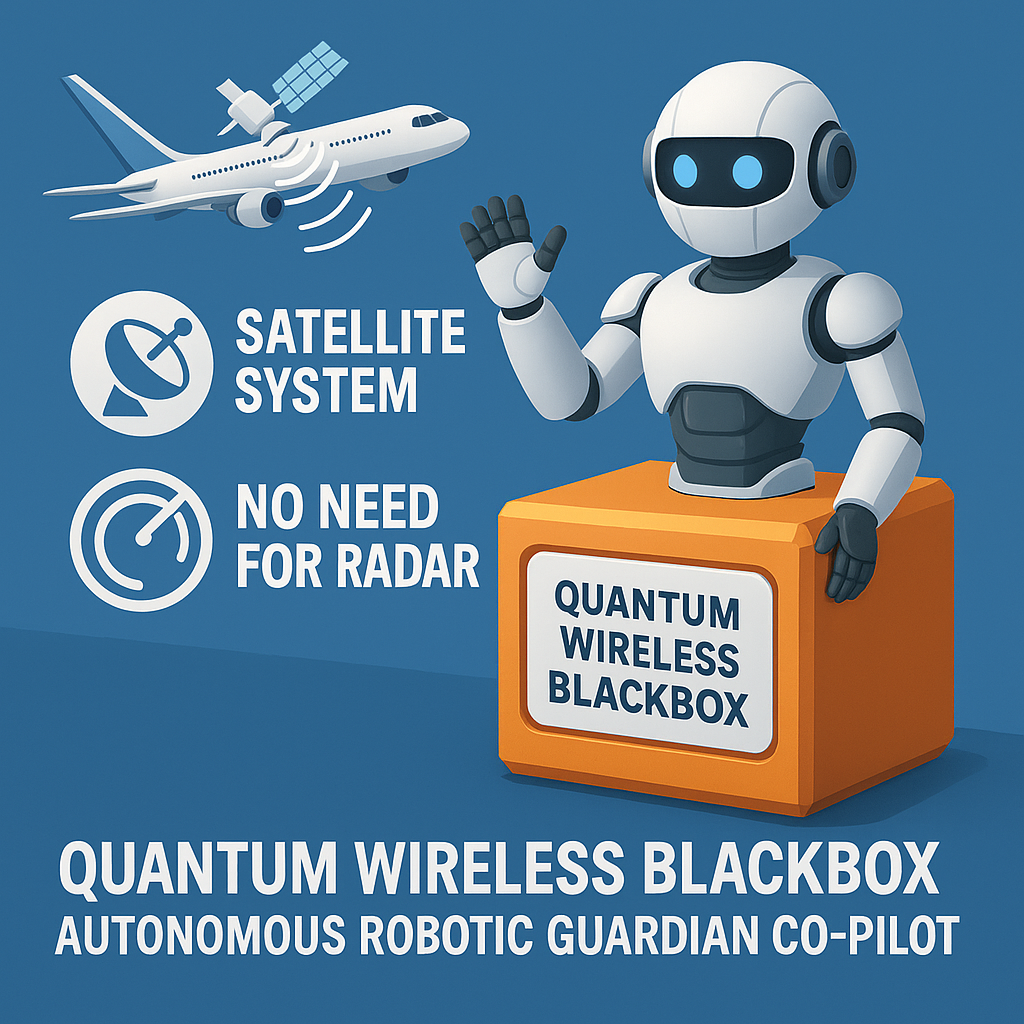
The Quantum Wireless Blackbox and Autonomous AI Co-Pilot System transforms the traditional blackbox into a real-time flight safety intelligence platform capable of monitoring, advising, predicting, communicating, and—when necessary—taking control to protect the aircraft and everyone aboard.
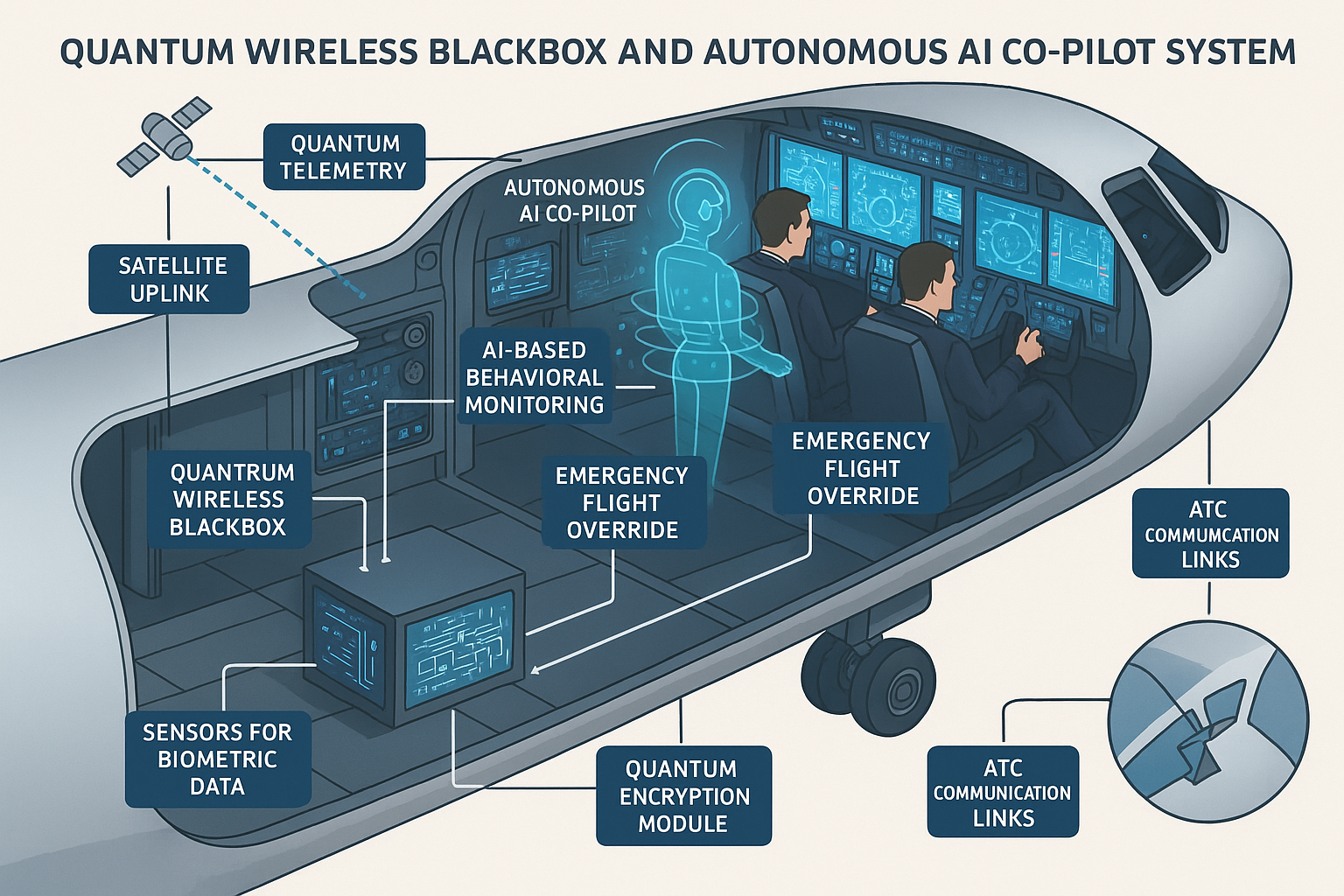
It is a digital flight engineer, an intelligent emergency manual, a structural health monitor, a secure communications hub, and an autonomous backup pilot in one aviation-grade platform.
Converses with pilots, interprets actual aircraft data, recommends technical procedures, and reduces cockpit workload during routine and emergency operations.
Continuously transmits authenticated position, vector, system, and health data through satellite and network links without depending exclusively on ground radar.
Can isolate dangerous commands, stabilize the aircraft, coordinate with ground systems, divert, and assist with autonomous landing when pilots are incapacitated or a critical threat is verified.
Analyzes massive volumes of historical and live blackbox data to detect patterns, forecast failures, identify abnormal behavior, and recommend preventive action.
Optional interior and exterior micro-cameras visually inspect the cockpit, cabin, wings, engine areas, landing gear, and control surfaces for hazards and anomalies.
Quantum-resistant encryption and optional quantum key distribution protect sensitive telemetry, audio, video, commands, and forensic records against interception or alteration.
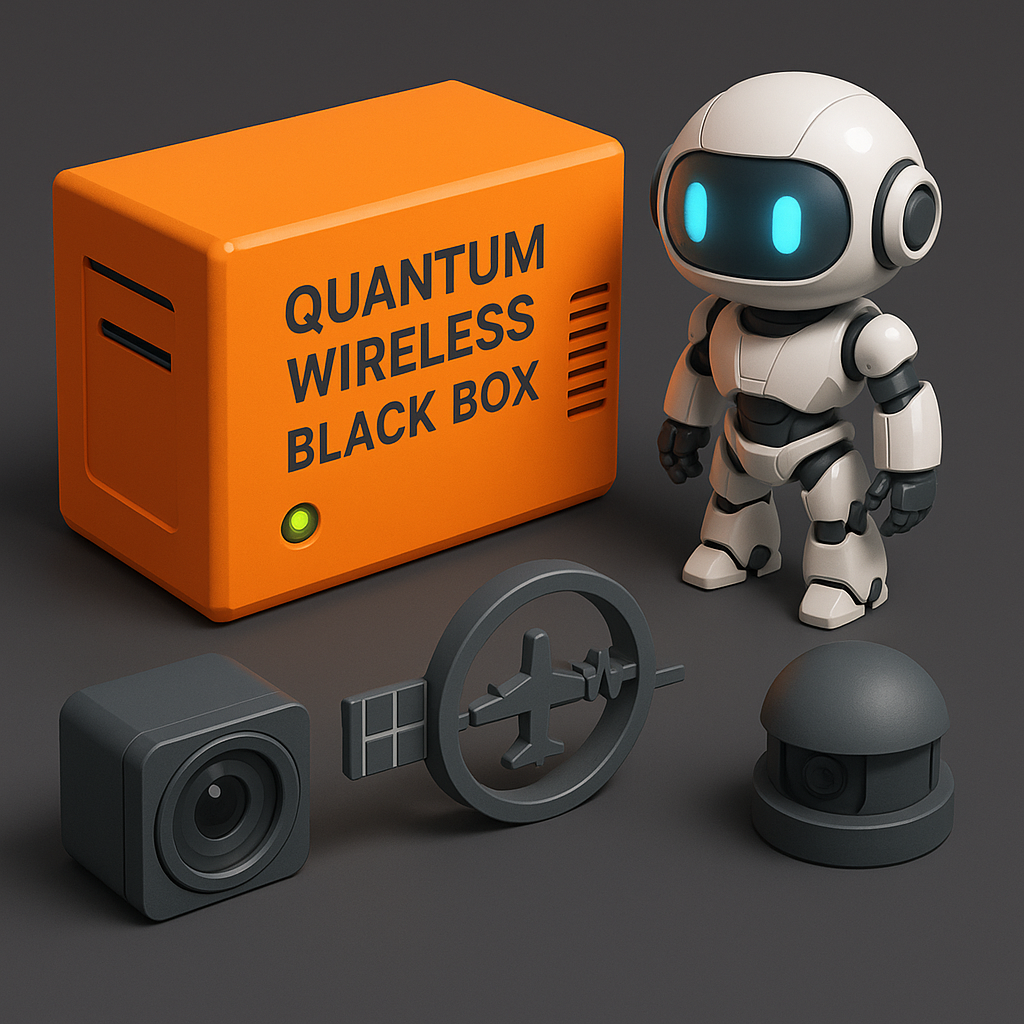
The universal integration layer synchronizes with existing flight data recorders, cockpit voice recorders, avionics buses, sensors, flight computers, and approved external data services.
AI fuses telemetry, pilot condition, weather, ATC information, camera feeds, maintenance history, traffic, and structural health data into one real-time operational model.
Pilots receive conversational, prioritized instructions based on the exact aircraft condition—eliminating frantic manual searches through technical manuals during an emergency.
When multiple safeguards verify incapacitation, malicious control, severe system failure, or another critical hazard, the system may initiate protected emergency control and safe-flight procedures.
The conceptual simulation below shows the aircraft streaming high-priority telemetry through a secure satellite pathway while the onboard AI evaluates flight health and prepares recommended action.
Distributed sensors, cameras, avionics interfaces, and AI analytics continuously evaluate the cockpit, cabin, wings, engines, landing gear, flight controls, structural loads, communications, and environmental conditions.
A live model compares current loads and behavior against historical aircraft performance and known failure patterns.
AI identifies subtle changes before they become obvious cockpit alarms or visible damage.
Micro-cameras give the AI and authorized ground personnel direct confirmation of critical conditions.
Ground crews receive actionable reports before landing, improving response planning and fleet availability.
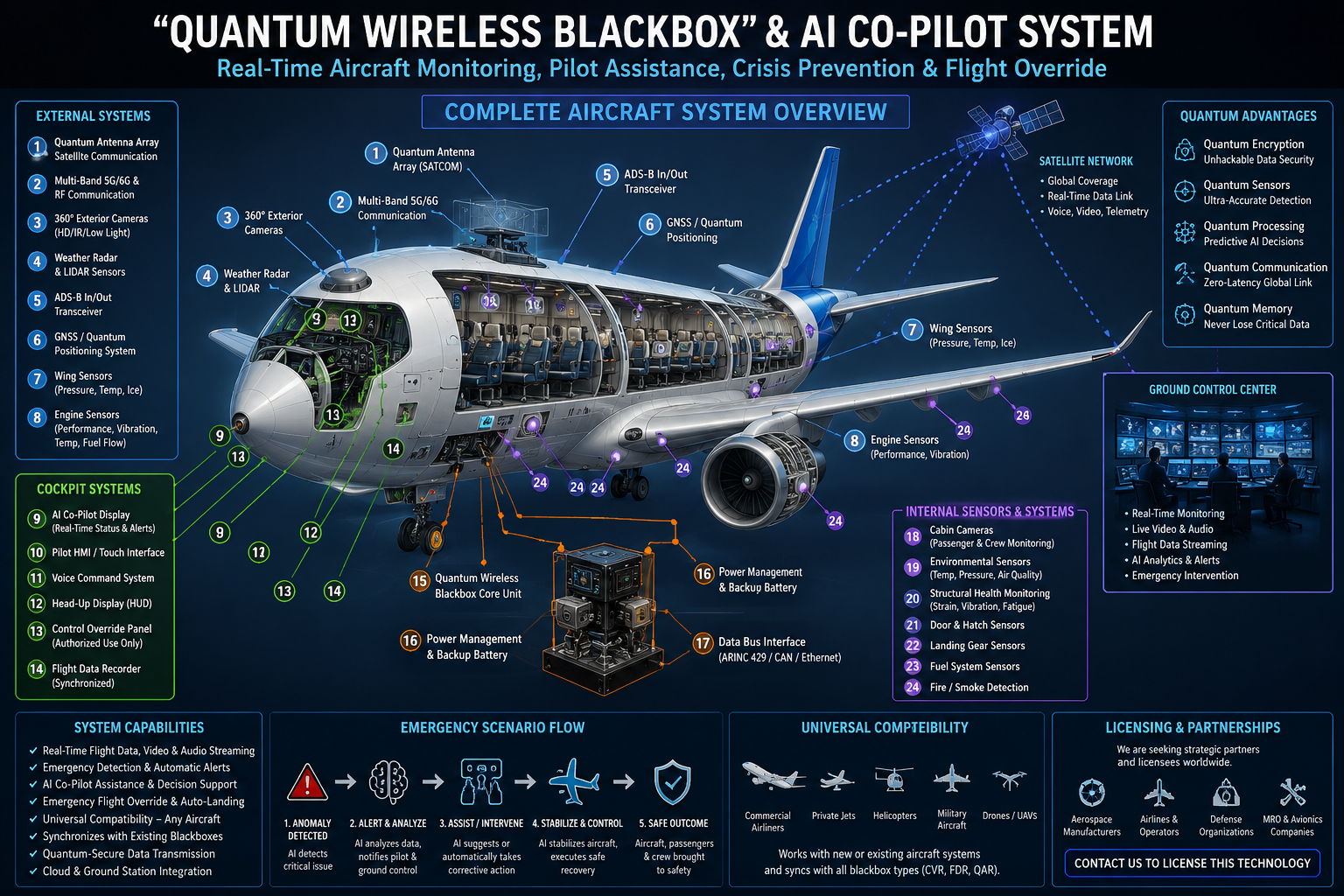
Expanded aircraft-system overview showing the major monitoring, communication, camera, sensor, blackbox, pilot-assistance, and emergency-control components.
A live-action demonstration combines real pilots, passengers, air traffic controllers, engineers, emergency responders, and cinematic futuristic animation to show the system detecting danger, assisting the crew, transmitting live data, taking emergency control, and landing safely.
The presentation begins with a routine ocean crossing, reveals the aircraft’s digital nervous system, demonstrates real-time AI technical assistance, detects structural danger and pilot incapacitation, coordinates with ground control, and completes an autonomous emergency landing.
View the Film Storyboard ↓A real aircraft leaves radar coverage. The Quantum Guardian activates and connects to the aircraft’s electronic heart.
Pilots receive spoken diagnostics and emergency procedures based on live aircraft data—not a generic manual.
Satellite links, cameras, biometrics, structural sensors, and ground personnel collaborate during a developing crisis.
The system stabilizes, diverts, lands, secures the flight record, and brings every person aboard to safety.
Two pilot actors, cabin crew, passengers, air traffic controllers, airline operations personnel, engineers, emergency responders, a narrator, and a calm AI voice.
Transparent aircraft cutaways, glowing data pathways, structural stress maps, holographic diagnostics, satellite beams, digital-twin simulations, and autonomous landing trajectories.
The film moves from wonder to concern, intelligence, crisis, intervention, relief, and hope—positioning the invention as powerful, controlled, and life-preserving.
A commercial aircraft flies over a vast ocean at sunrise. Real pilots monitor the instruments while passengers rest. The tracking line fades as the aircraft moves beyond conventional radar coverage.
“Traditional blackboxes record what has already happened. But what if the aircraft could understand what is happening now—and act before disaster occurs?”
A detailed animated aircraft cutaway reveals the Quantum Wireless Blackbox, avionics interfaces, engines, wings, cameras, flight controls, structural sensors, and existing recorders connected by luminous data pathways.
AI: “Quantum Guardian online. All aircraft systems connected. Structural integrity normal. Flight monitoring active.”
A hydraulic warning appears. The pilot asks the system to identify the problem. The AI analyzes pressure, actuator position, maintenance history, weather, fuel, and diversion airports, then displays the correct procedure.
“Instead of forcing pilots to search through manuals during a crisis, the system identifies the problem and delivers the correct procedure in seconds.”
Internal and external cameras, strain gauges, acoustic sensors, vibration detectors, and fiber-optic monitors reveal a developing structural condition. The system reduces maneuver limits and selects a smoother route.
The aircraft transmits authenticated position, telemetry, cockpit audio, authorized video, engine condition, structural stress, weather, and pilot status to airline operations and air traffic control.
Both pilots become incapacitated. Biometric and camera systems verify the emergency. The aircraft levels itself, activates emergency protocols, alerts ground control, selects a suitable airport, and begins an autonomous diversion.
AI: “Aircraft stabilized. Human flight crew incapacitated. Autonomous diversion and landing sequence initiated.”
In a separate scenario, an unsafe unauthorized descent is compared against terrain, flight plan, ATC instructions, pilot behavior, cockpit video, and biometric evidence. The command is restricted and the aircraft returns to a safe envelope.
Emergency vehicles line the runway. The aircraft lands safely, the pilots receive medical care, passengers exit, and engineers access the secured flight record.
“This is more than a blackbox. It is an AI pilot, aircraft engineer, safety guardian, global communication system, and emergency command center.”
Quantum Wireless Blackbox
The aircraft that watches itself. Understands itself. And protects everyone aboard.
Patents Pending Worldwide · Available for Strategic Partnerships and Licensing · McZeal Robotics, Ltd.
The invention is designed to support—not replace—the expertise of pilots, engineers, dispatchers, air traffic controllers, emergency responders, and airline operations teams.
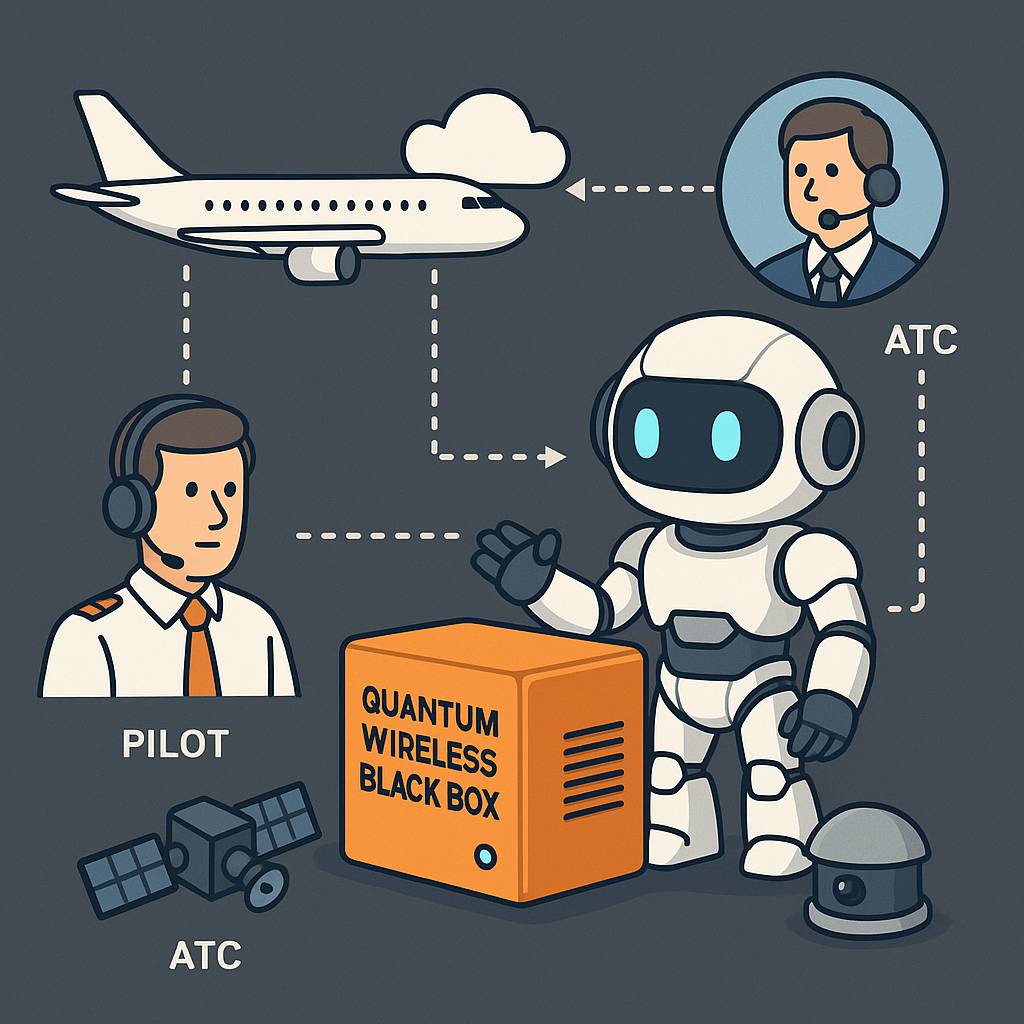
The platform can be installed in commercial aircraft, private jets, cargo aircraft, helicopters, military platforms, and unmanned aircraft, while synchronizing with existing blackboxes and certified avionics.
This invention presents a new class of aviation safety platform: a continuously connected robotic guardian and extra AI pilot capable of understanding the aircraft, assisting the crew, and acting when every second matters.
Contact the Inventor